Xinbeitou Hot Springs Area
Taipei City's northernmost district, Beitou began to rise as a hot spring destination in 1896, when a Japanese businessman named Hirada Gengo opened the area's first hot spring hotel Tenguen. The springs here are fed by water from Thermal Valley and Longfeng (Longfong) Valley near Xingyi Road. Three distinct types of spring can be found here, including green sulfur, white sulfur, and iron sulfur. Bathing facilities are equally varied, with everything from traditional Japanese-style bathhouses to fashionably modern spas catering to day-trip and overnight visitors. Apart from the springs, there are plenty of other attractions in Xinbeitou to reward repeat visitors.
Hot springs, old streets, and history join with delicious local cuisine to create Xinbeitou's distinctive visitor appeal. In recent years, upscale hotels have added a new face to this historic mountain getaway just minutes from downtown Taipei.
Free-Range Chicken and Mountain-Grown Vegetables
Due to its convenient transportation links, Xinbeitou is a popular destination for Taipei residents looking for a scenic escape and delicious cuisines just a stone's throw from the city center. The traditional and modern resort-style restaurants here serve up dishes made with free-range chicken and mountain-grown vegetables, winning over diners with an unforgettable taste.
Spring Types: Acidic sulfur salt springs (green sulfur), acidic hydrochloric acid springs (white sulfur), and carbonate springs (iron sulfur)
Water Qualities: Green sulfur springs Yellowish-white, strong sulfur smell, and suitable for bathing; White sulfur springs Slightly greenish, sulfur smell; Iron sulfur springs: Reddish-brown and suitable for bathing.
Shamao Mountain Hot Spring Area
Shamao Mountain welcomes visitors with a year-round profusion of color and a natural landscape that one will want to slow down to admire. This is also a good spot for a hot spring soak and a feast of wild-grown vegetables in nature's scenic embrace, offering something for body, mind and spirit. Volcanic action and geological factors have produced several sources and types of hot spring on Shamao Mountain. Sulfuric acid springs are dominant here and the water has a sulfur smell that is slightly stronger than that of the springs in Beitou.
Most of the hot spring hotels and restaurants here are clustered in Pingdeng Village near Lengshueikeng, and in Macao off the Yangming Mountain (Yangmingshan)-Jinshan Highway. There are also a few establishments off Yangde Boulevard that offer bathing, restaurant and tea service.
Wild-Grown Vegetables
Shamao Mountain is known for its wild-grown vegetables. Thanks to the relatively low temperature and fertile soil here, the locally grown veggies are especially sweet and tasty. Over the past few years, the restaurants here have been adding innovative dishes to their menus to attract diners. In addition to a wide selection of vegetables, visitors can also order free-range chickens, seafood and other scrumptious dishes.
Spring Types: Lengshuikeng—Neutral, sulfate springs; Macao—Acidic, sulfuric acid springs.
Water Qualities: The hot springs in both places are commonly known as white sulfur springs due to their milky color. The water is not potable.
Yangmingshan Hot Spring Area
Yangmingshan's hot springs are mostly white sulphur springs, followed by blue sulphur springs. Most of the springs are located in Liuku and Qiku on the west side of Shamao Mountain, and therefore bathhouses are many in that area. Yangminshan National Park, Lengshuikeng, Macao and Gengzieng are the three other places to take hot spring baths. Due to frequent volcano activities, the minerals contained in each spring are different. That is, each hot spring is unique in water quality and temperature.
For instance, the water of Lengshuikeng is milky white. Its temperature is rather low, at around 40 Celsius degrees, hence the name in Chinese, meaning "cold water pit." Macao's hot spring water is 70-75 Celsius degrees and Gengziping's can reach 90 Celsius degrees.
Water Qualities: White sulphur spring is the most common type, followed by blue sulphur spring.
Jin Mountain (Jinshan) Hot Springs
During the Tongzhi period (1862~1874) of the Qing dynasty, a major earthquake created fissures in the rock stratum of Jin Mountain (Jinshan). It was from these fissures that the Jin Mountain (Jinshan) hot springs were born. One of the most popular bathing areas dating back to that time is the Governor-General Hot Spring on Minsheng Road. In recent years, several large hot spring hotels have also sprouted up here as well, turning Jin Mountain (Jinshan) into a major hot spring destination.
Jin Mountain (Jinshan) is also home to one of the few submarine hot springs in the world. The water originates from the Datun Mountain volcanic range and flows past Macao, Jin Mountain (Jinshan), and Wanli before emerging off the coast.
The Yangmingshan- Jin Mountain (Jinshan) Highway is a scenic mountain route that links the peaks of Yangming Mountain (Yangmingshan) with the coastal hot springs of Jin Mountain (Jinshan). Springs aside, Jin Mountain (Jinshan) is also known for the duck meat sold at the Jinbaoli Duck Meat restaurant across from Guang-an Temple.
Duck Meat
Jinbaoli Duck Meat began from an unassuming little noodle stall in front of Guang-an Temple into a current renowned duck meat restaurant. Fate would bring the owner together with a duck farmer in Jin Mountain (Jinshan's) Zhongxiao (Jhongsiao) Beach area, giving birth to a duck meat empire.
At the Zhongxiao (Jhongsiao) Beach duck farm, ducks are raised over 130 days, or nearly twice than general breeding period, roughly 70 days, and fed on wheat, corn and lard. When boiled, the meat is chewy and doesn't have any offensive smell. The restaurant has a limited daily supply of white duck meat, and business tends to pick up in the afternoon. Come early or you may miss out.
Spring Types: Sulfur salt springs (submarine hot spring), carbonic acid springs, sulfur springs, and iron springs
Water Qualities: Sulfur salt springs ─ Clear and slightly yellow, with a salty astringent taste; Sulfur springs ─ Pungent sulfur smell, translucent milky white or gray; Carbonic acid springs and iron springs, suitable for bathing
Wulai Hot Springs
Hot springs were first discovered in Wulai over 300 years ago by the Atayal people. The springs, which emerged forth from the Nanshi River valley, are known as "beauty baths" since the water softens cuticles and moisturizes the skin. In earlier times, the bathhouses here only provided basic facilities. Today, however, visitors can choose from a wide range of upscale spas with hydrotherapy facilities and an inviting ambiance. Most of the bathhouses in Wulai are clustered on the Wulai Street, but newer establishments are also popping up along the Provincial Highway 9A and in the Wulai Village to meet the growing demand.
Wulai is a popular hot spring area in the northern Taiwan. It enjoys a high quality water which is clear, odorless and known for its beauty-enhancing effects. Visitors to Wulai can also experience the culture, cuisine and spirited dancing of the Atayal indigenous people.
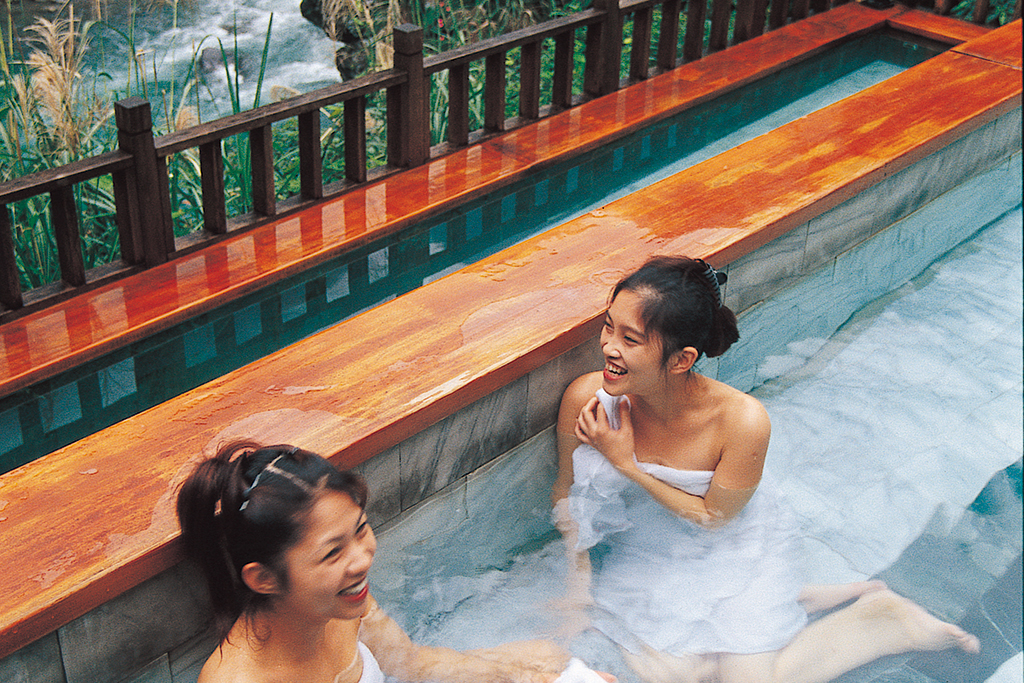
Wulai Hot Springs
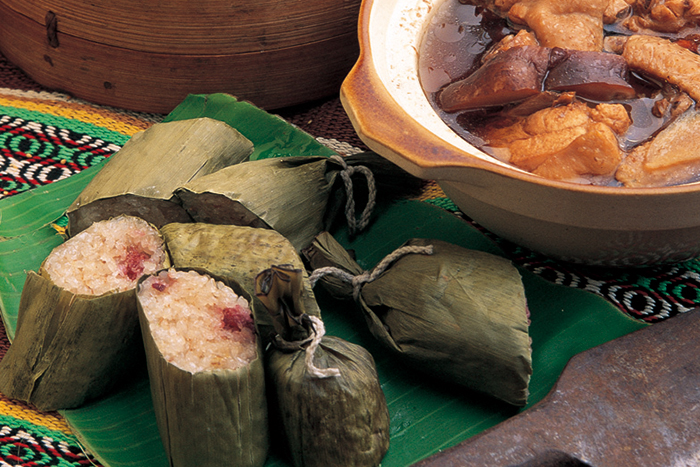
Atayal Cuisine
Atayal Cuisine
Wulai was settled by Atayal tribes from the Taoyuan and Hsinchu areas during the late Qing period. This area is consequently known for its Atayal cuisines, which emphasize the original flavor of the ingredients without too much heavy-flavor sauce. Commonly used dipping sauces include fermented shiso (perilla) and plum juice or honey; and steaming, boiling and roasting are the preferred cooking techniques. All of the ingredients used are sourced from the nearby mountain areas. Unlike many other indigenous groups that like to eat "a-bay" (a concoction made of shellflower leaves, nicandra leaves wrapped around glutinous rice, boar meat, mushrooms and dried shrimp), the Atayal stuffings are made of sweet potato rice, banana rice or Chinese yam rice without pork or soy sauce. The resulting dishes are refreshingly tasty and healthy.
Spring Type: Slightly alkaline; sodium bicarbonate
Water Qualities: Clear tasteless, known as "beauty baths."
Jiaoxi Hot Spring Area
Jiaoxi is one of only a few lowland hot spring sites in Taiwan. The springs are fed by rainwater that has seeped down into subterranean rock, where it is heated by magma remaining from a volcanic eruption on Guishan (Turtle) Island thousands of years ago.
The hot spring industry in Jiaoxi dates back to the Japanese colonial era (1895~1945), during which this area was known as the "Tangwei Hot Springs". Nakashi music and bathhouses characterized the local scene back then, earning the area a nickname of "Little Beitou." In recent years, the hot spring spas here have preserved Jiaoxi's traditional ambiance but with a more modern emphasis on health and fitness. The spring water and facilities are both of excellent quality.
Jiaoxi is a traditional hot spring area with a new face, offering visitors a wide range of bathing options. The locally grown vegetables, irrigated with nutrient-rich spring water, are another good reason to visit Jiaoxi.
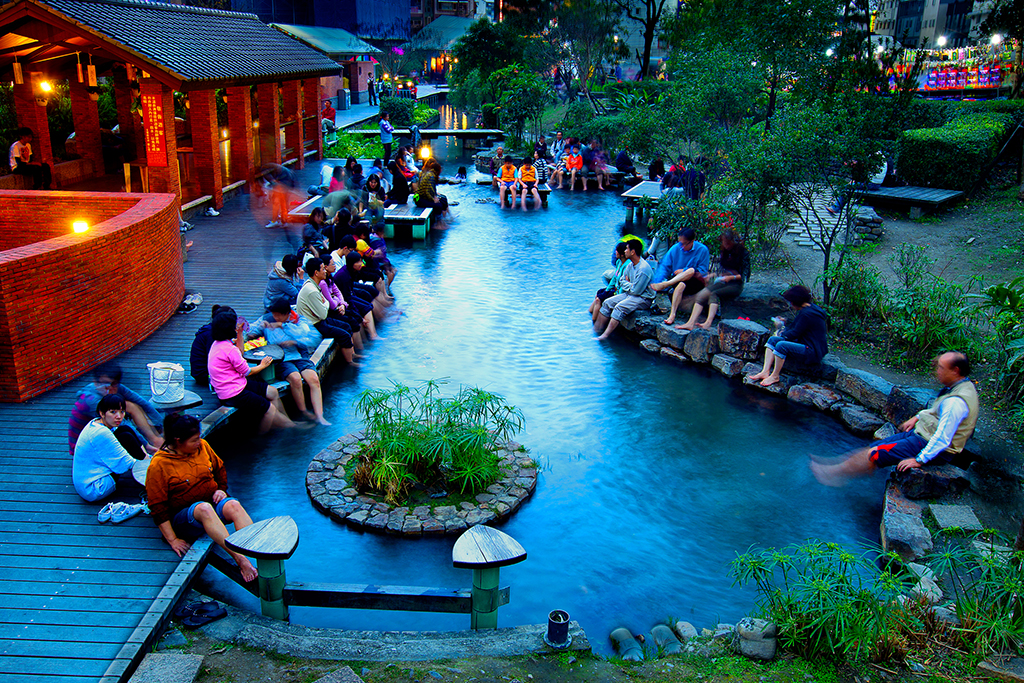
Jiaoxi Hot Spring Area
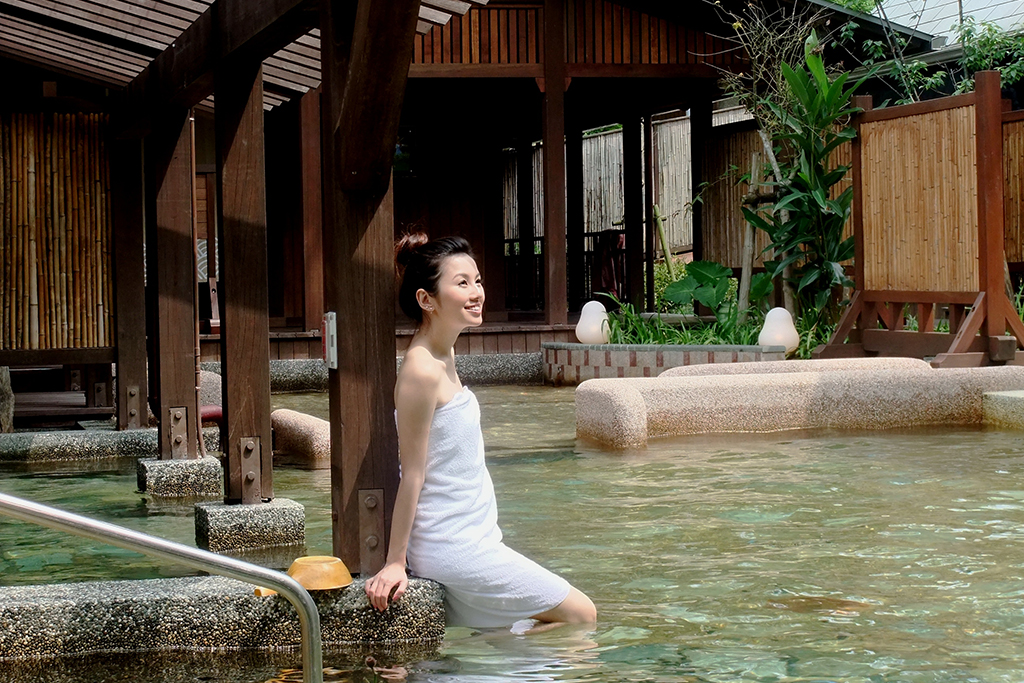
Hot Spring Vegetables
Hot Spring Vegetables
The hot springs of Jiaoxi are fed by pure and clean water at a temperature range of 22 to 33 degrees centigrade. The water is rich in iron, manganese, magnesium, calcium and other trace elements making it perfect for the irrigation usage. Vegetables raised on the water grow quickly and are unusually crisp, tender and sweet. With support from the Jiaoxi Township Farmers' Association, the local farmers have made hot spring vegetables one of the specialty items of Jiaoxi. The locally grown water spinach, tomatoes, sponge gourd, and water bamboo, collectively known as the "four treasures," are particularly well known.
Spring Type: Sodium bicarbonate
Water Qualities: Clear and tasteless
Last update time:Nov 18, 2021